 Image 1 of 2
 Image 2 of 2
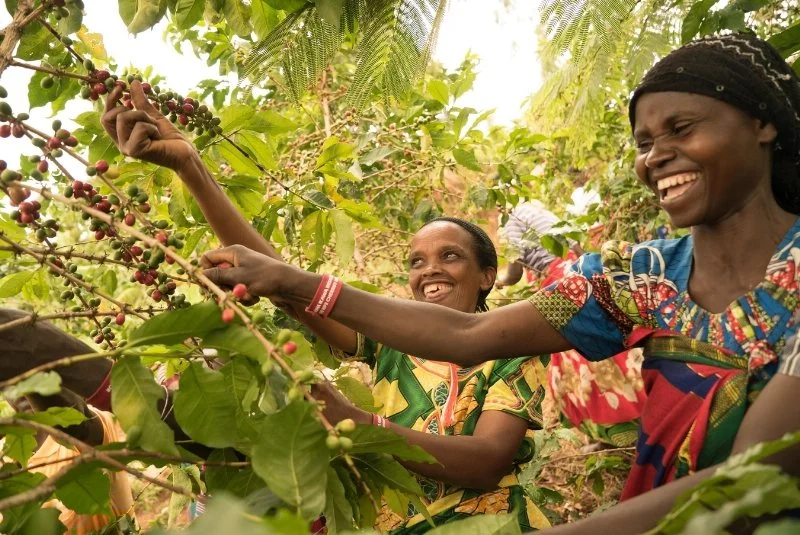
Ripe red cherries are handpicked between January and March and taken to a collection point to be hand-sorted by pickers before being transported to the El Borbollon mill. Upon arrival, the cherries are emptied into separate tanks for different lots from farms around the region. Water is used to move the cherries up a pump and into a "Pacas" depulper (of Salvadoran origin), which uses a cylinder pushing against a metal wall to remove the skin of the cherry from the beans. The pulped cherries are composted with calcium and then redistributed among farmers using the mill as fertilizer for the next harvest.
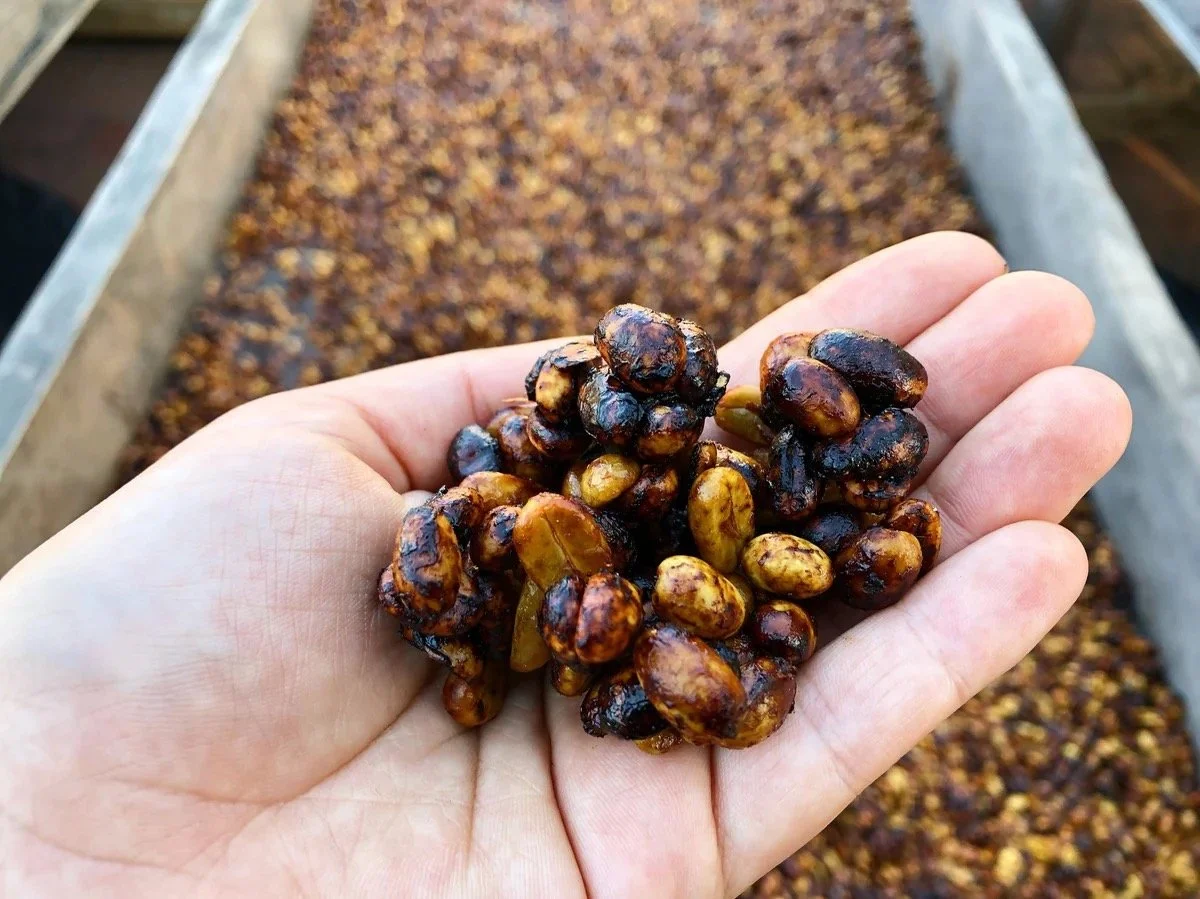
The sticky beans are then moved through channels to fermentation tanks, where they rest for 13 to 15 hours while naturally occurring bacteria and microbes break down the sugars and alcohols in the mucilage of the bean.
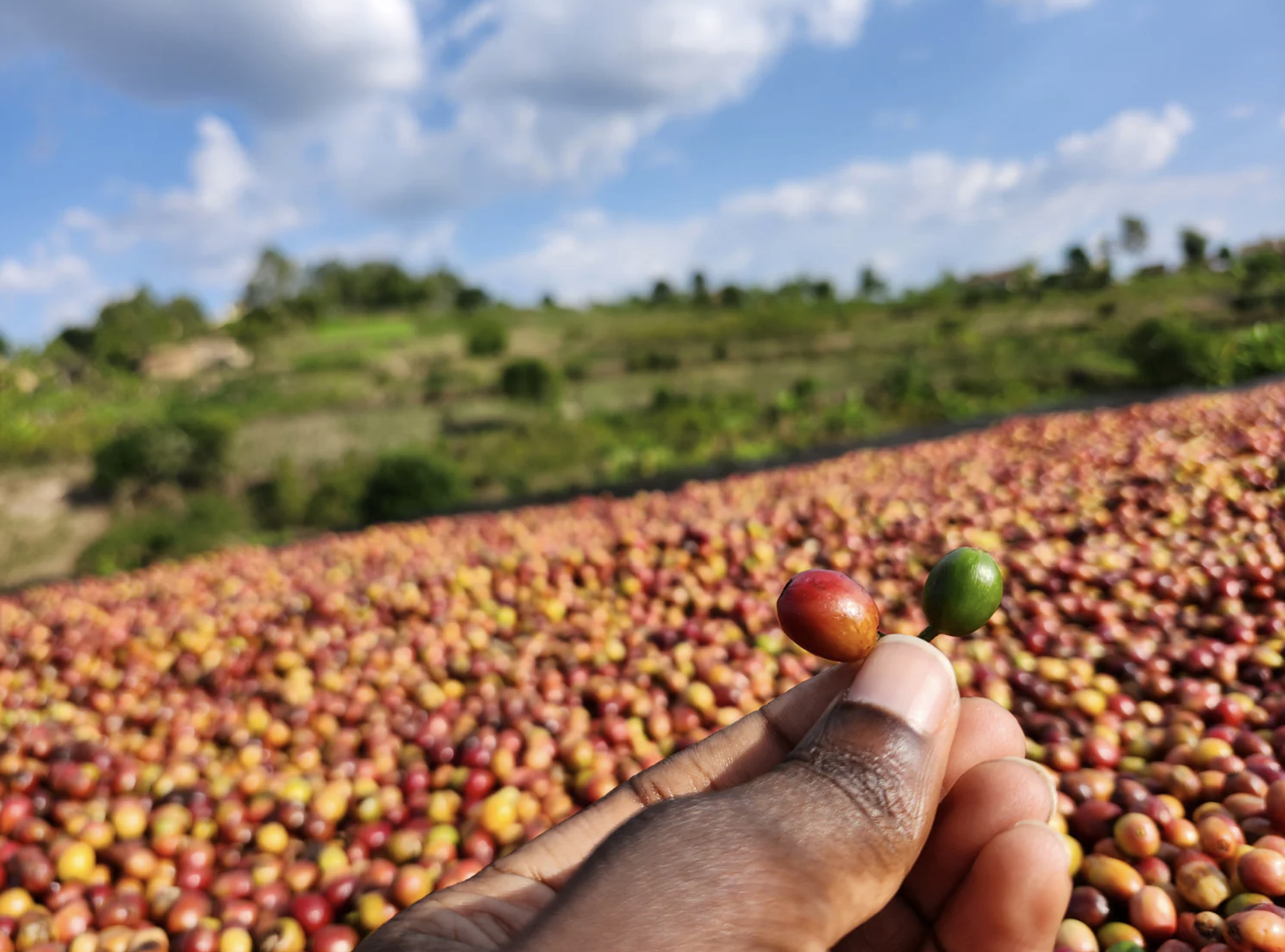
The fermented beans are then moved to a washing machine, where fresh water is used to remove any remaining mucilage and prepare the beans for the drying patios. All water is recycled and reused to move fresh cherries around the wet mill. The washed beans are then taken to the drying patios and kept separate by lot. They dry for around 8-10 days, though El Borbollon is experimenting with extending drying periods by laying the beans densely and covering them for parts of the day. It is believed that extending the drying time will result in more complex nuances in the cup.
The dried parchment is left to rest for around six weeks before being hulled to remove the parchment layer. Once hulled, the beans are hand-sorted by a group of around 40 women who remove any defects. The women work in shifts, are paid above minimum wage, and are highly skilled at their work—our lot from Bosque Lya will be left with 0-1% defects. The mill owner, Eduardo, mentioned that while he could source a machine to sort the beans, it would result in the loss of many jobs.